If you’ve run a brokerage in the last twenty years, you’ve used BrokerMetrics or sat across from someone who did. The Terradatum product became shorthand for “what’s our market share” in broker-owner circles, which is about as high a compliment as software gets in this industry. The knock was never the data. It was that the thing lived on one machine in the office, and whoever had that laptop had the numbers. Lone Wolf has since moved the whole product to the web inside Foundation, and last week they showed me a new module called Talent that changes what BrokerMetrics is for. Just a quick aside, man Lone Wolf has done a great job with the new UI in their products. How do I know? Well, they pretty much followed Cloud CMA style guide, so ‘natch.
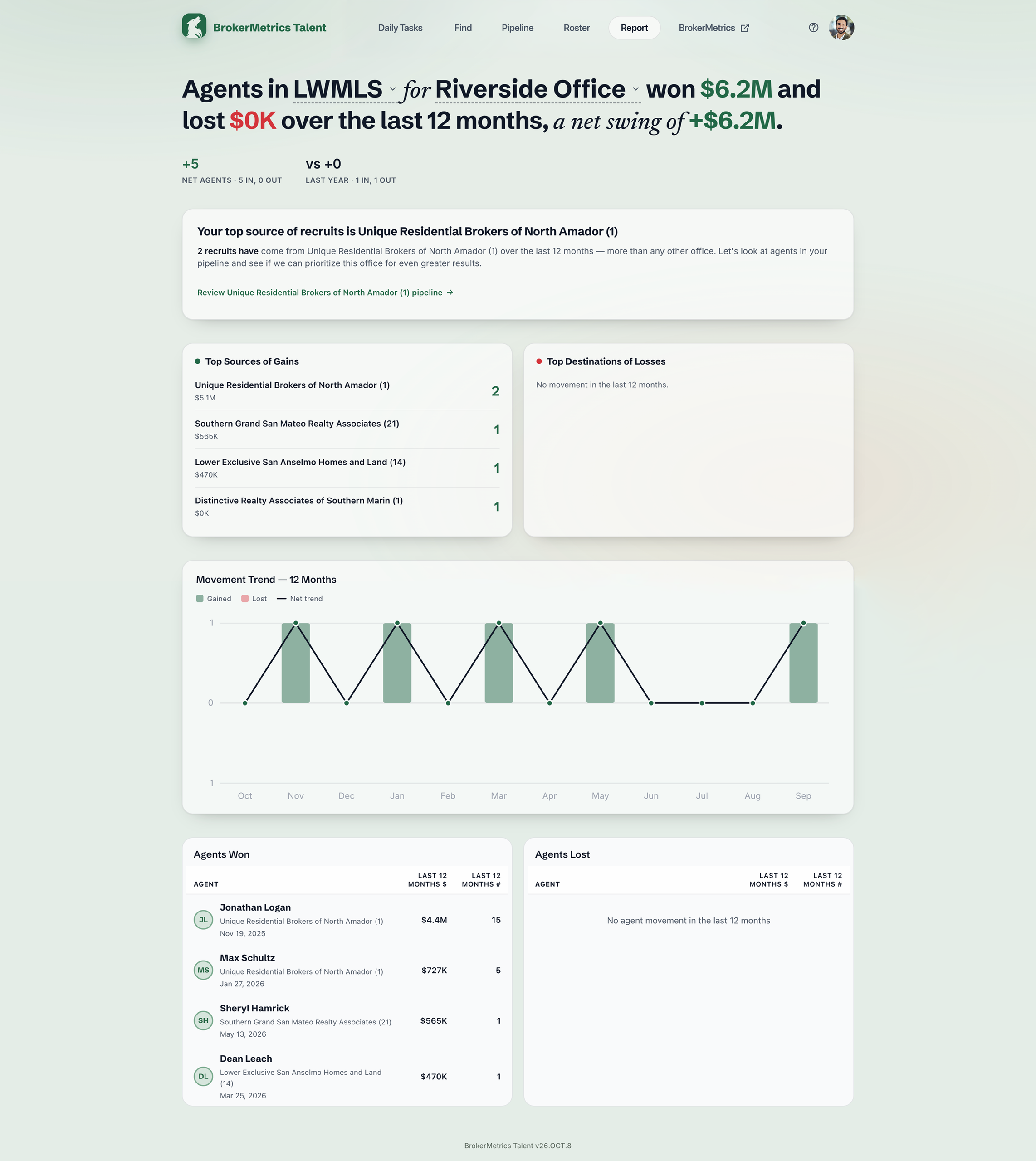
Anyway, back to BrokerMetrics Talent. First, the part that hasn’t changed. Market Share and Market Dynamics are still the heart of the product: where a broker actually wins, sliced by office, property type, or price band, and whether it’s a buyer’s or seller’s market with the inventory and pricing data to prove it. Yosef Tajzoy, a former broker now on Lone Wolf’s sales engineering team, made the point that stuck with me. When he ran an office, finding time to put real market data in front of his agents was the hardest part of the job. Brokers who do it have agents who walk into listing appointments with numbers instead of a hunch, and those agents tend to stay. Market analytics is a retention argument before it is anything else.
Which brings us to BrokerMetrics Talent. Everything it surfaces was already in BrokerMetrics. You could always run the search and find which of your own people were drifting. Almost nobody did, because it took a broker sitting down and doing the work. Talent reads the MLS production data daily, runs it through Lone Wolf’s Aspen AI, and hands the broker a short list of who to talk to and why. It then drafts the email, the text, and the call script.
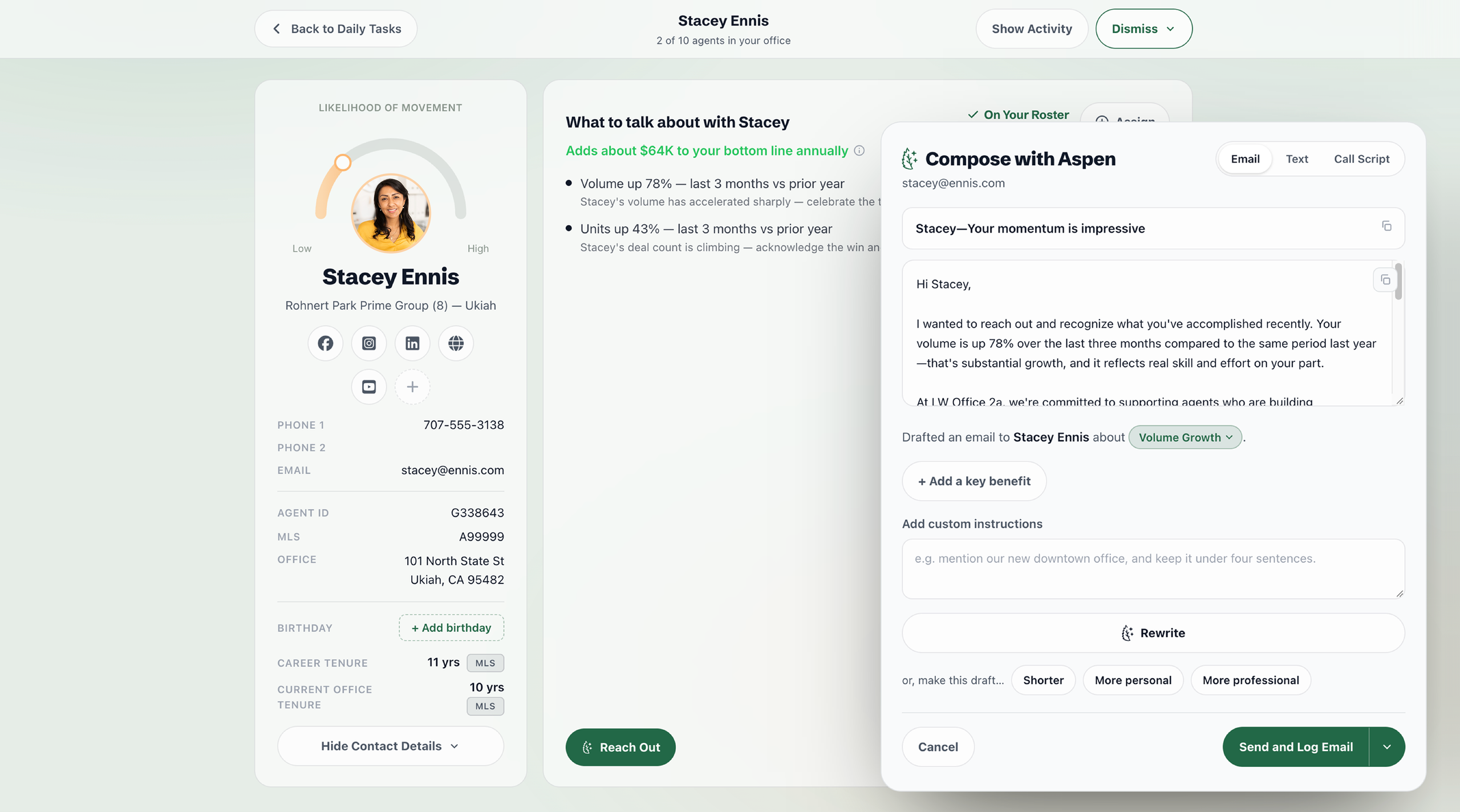
The piece I’d lead with is the Roster view. Your own agents get sorted into Needs Attention, Worth Recognizing, and Top Producers, each with a likelihood-of-movement gauge Lone Wolf says is built on roughly fifty variables. A top producer whose volume is up 168% gets a card that says, in plain language, to celebrate the trend before a competitor notices, along with a dollar figure on the profit you’d lose if they walk. Lone Wolf’s number is that losing one productive agent costs about $18,000, before you count replacing them or the fact that agents leave in packs. Yikes!
The feature I haven’t seen elsewhere is the Profitability Estimate. Enter your actual comp plans, a straight 70/30 or a graduated tier, and Talent projects what an agent nets the brokerage under each one from their real MLS production, and what the agent would earn. One caveat: it doesn’t pull from Lone Wolf Back Office, so the expense side is a market average you adjust by hand. That’s the integration I’d expect brokers to ask for first.
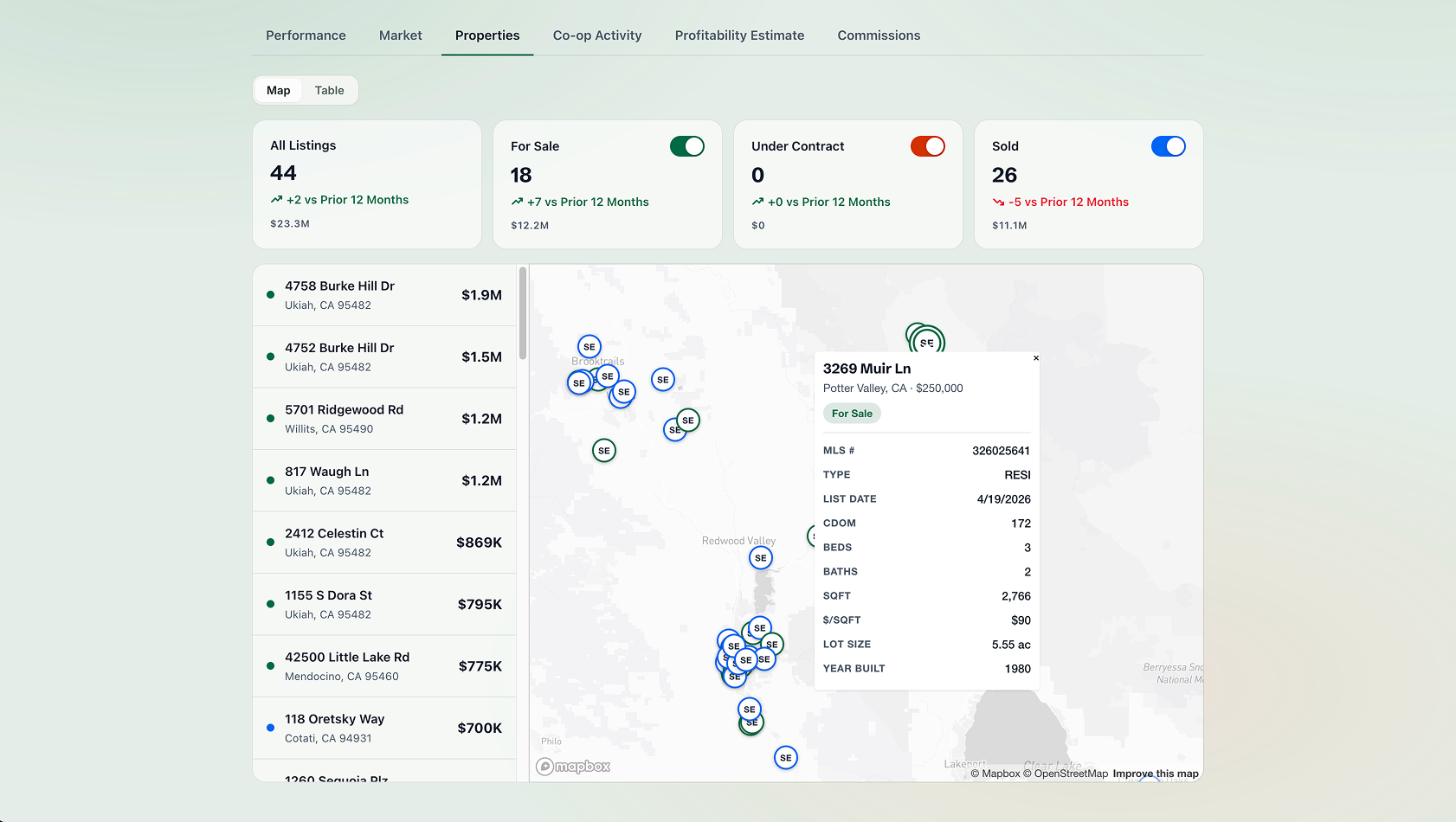
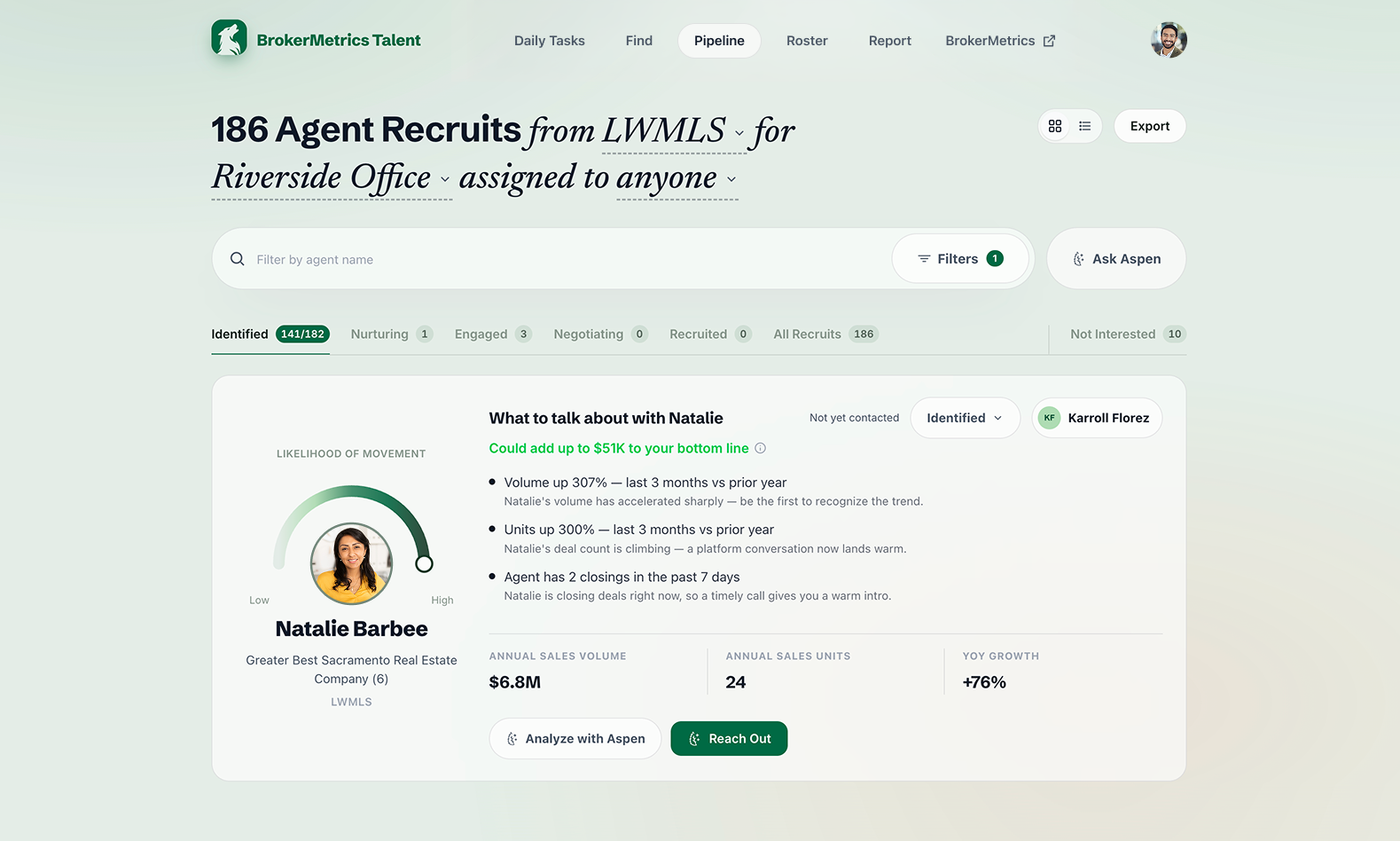
Yes, BrokerMetrics Talent recruits too. You can ask Aspen AI in plain English for agents who did three to fifteen deals in a county or in a shape you draw on the map, and move prospects through a pipeline to whichever manager owns recruiting. It’s well done. But the retention side is where I think the money is, and the market analytics that made BrokerMetrics a trusted name are still underneath all of it. There’s no separate Talent SKU; BrokerMetrics now brings Market Share, Market Dynamics, and Talent together. If you’re already a customer, upgrading gives you access to all three.
Congrats to the Lone Wolf team on this new release.
Disclosure: Giant Steps, my consulting firm, works with Lone Wolf Technologies on Cloud CMA, which I sold to Lone Wolf as part of W+R Studios.